

Principles
The principles below are not aspirations. They are commitments we have operated under for 25 years.
They have cost us work we could have taken but chose not to.
Our principles did not come from a strategy document. They came from watching transplant patients die from rejection while suffering with drug toxicity, and asking why the treatments causing both had not changed in 50 years.
Donor organs still preserved in solutions developed before the moon landing, stored in cool boxes, with methods unchanged since the 1960s. First-line chemotherapy for many cancers remain fundamentally the same as it was half a century ago: drugs that damage hearts, destroy immune systems, and end fertility. Gene therapies fail in human trials repeatedly, because they were developed in rodents and primates whose immune systems, tissue distribution, and viral responses bear little resemblance to our own.
20 years of trauma research and virtually nothing translated from animal models to approved treatments that stayed on the market. And beneath all of it, a gap between what gets published and what reaches patients.
We built Pebble because we could not keep working within a system that tolerated these failures.
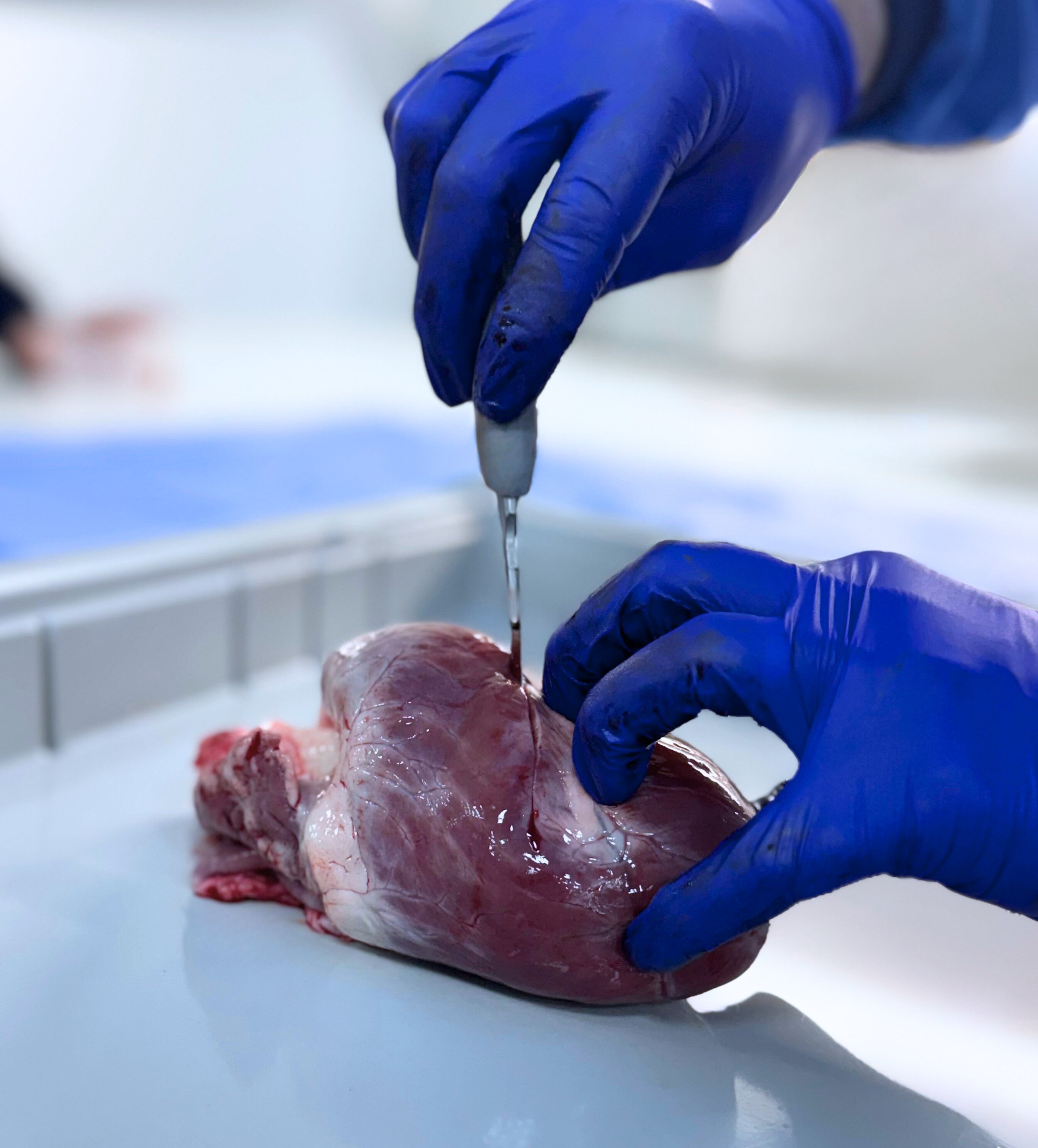
Our Principles.
-
![]()
We do not use laboratory animals.
Our pigs are sourced from the food chain, not bred for research. This isn’t an ethical compromise that sacrifices scientific rigour - our models better predict human outcomes.
-
![]()
We only work on problems that will reach patients.
Our research does not exist to generate publications. If solving a problem will not change patient practice, we do not take it.
-
![]()
We train researchers to ask different questions.
We teach people to ask "will this change practice?" before "will this get published?" We measure success by what reaches patients, not journals.
-
![]()
We stay accountable to patients.
We host open days for those living with the conditions our partners are working to treat so we never lose sight of our purpose.
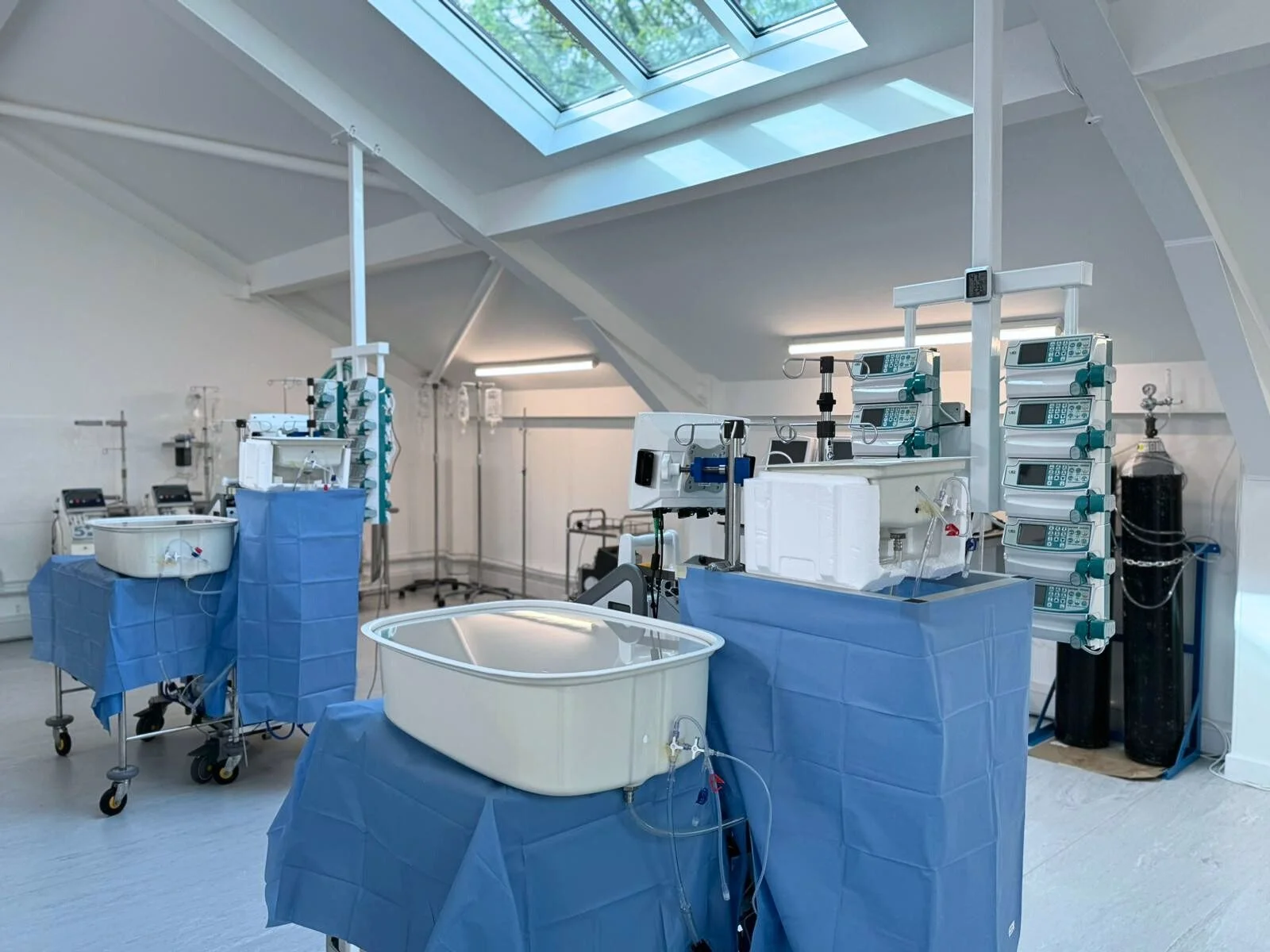
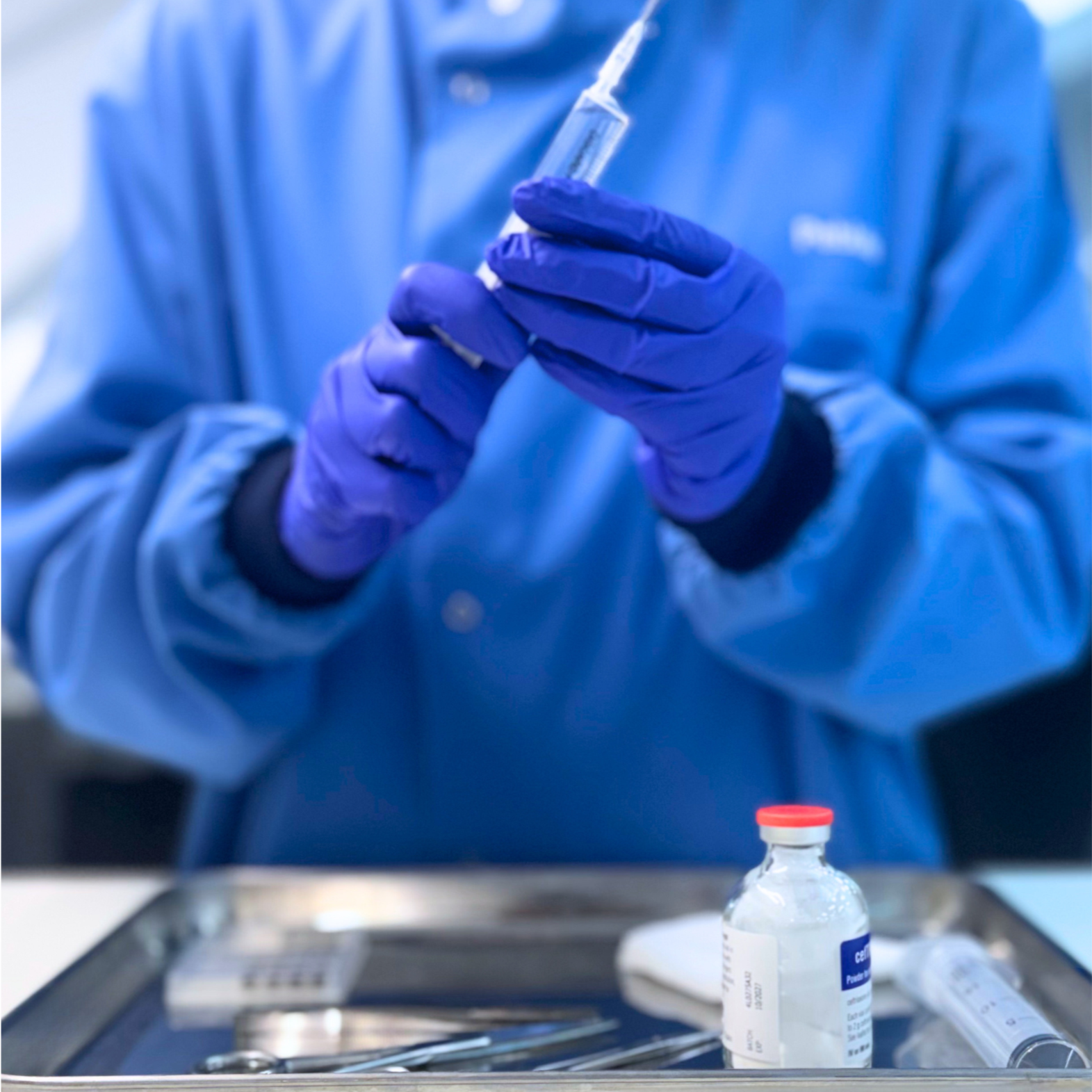
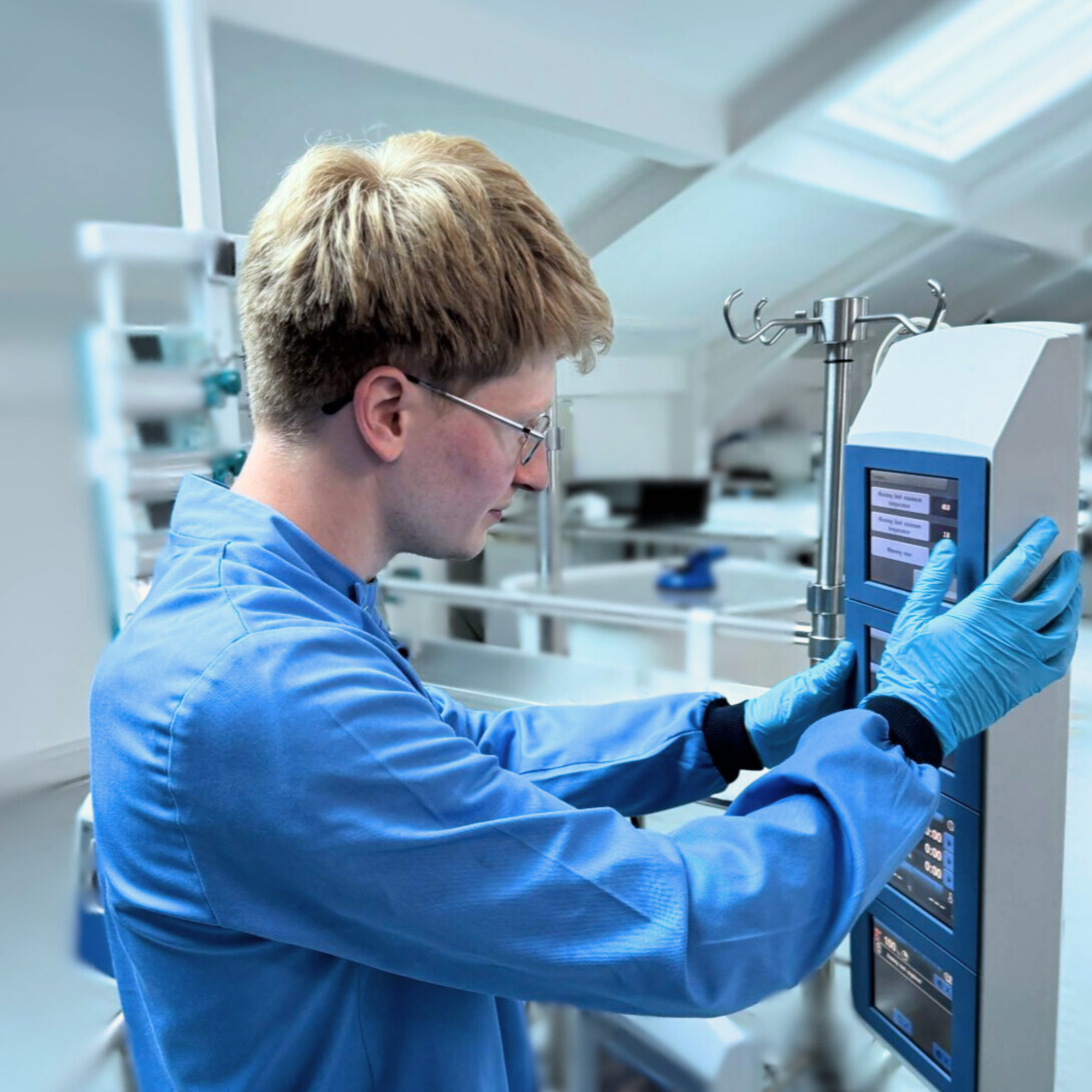
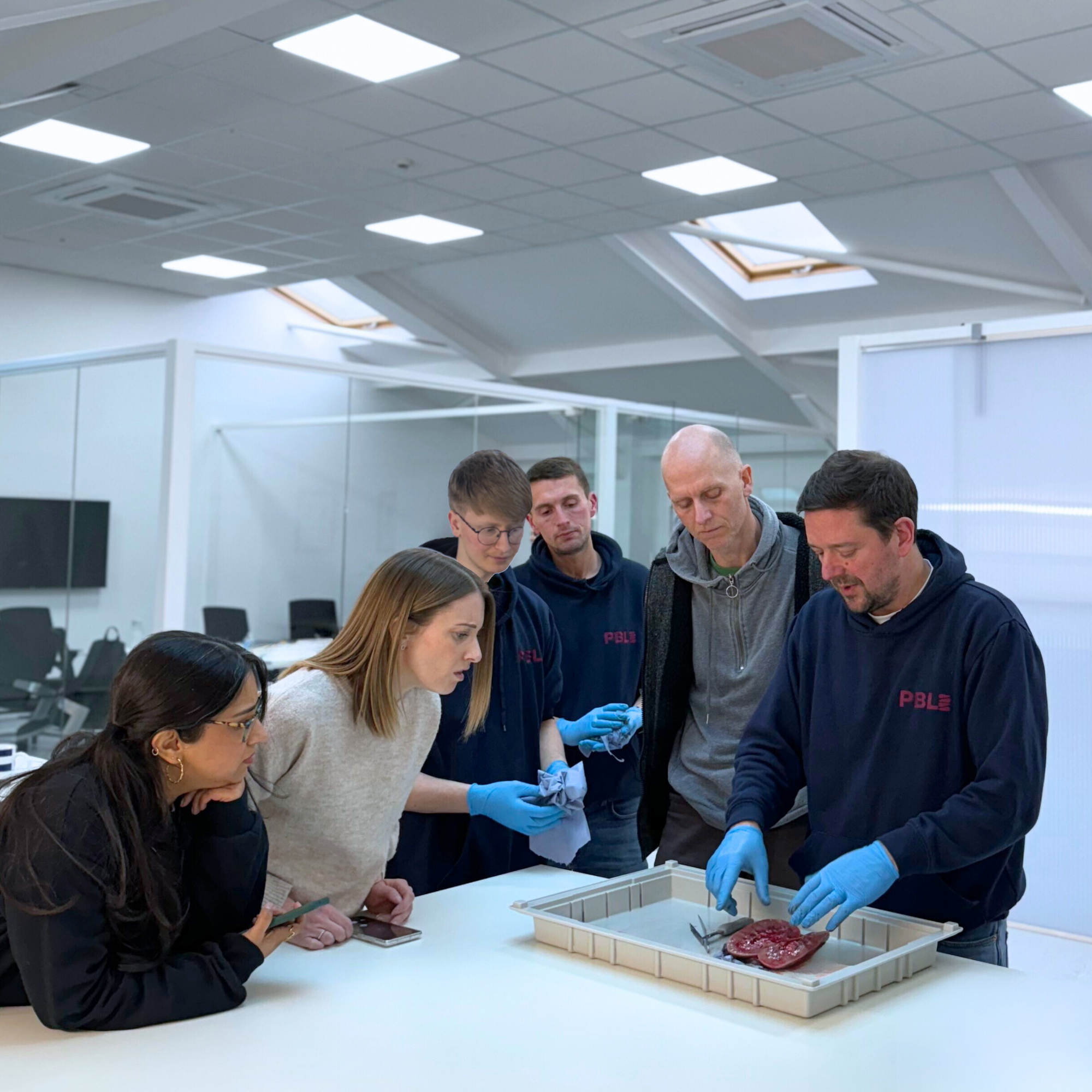
We remain students of what we study.
Connect a spleen to a liver on one of our circuits and they begin talking to each other immediately. Signalling, responding, adapting. A conversation in a language we have no knowledge of, never mind understanding.
A kidney producing urine, electrolytes shifting, acid-base balance adjusting. Thousands of biochemical reactions occurring every second, all invisible, and most are poorly understood. A heart completing another of its 2.5 billion lifetime beats. Trillions of exosomes communicating between cells in a drop of blood, in a dialect we can't decipher.
Stimulate a nerve and watch a limb kick. That single movement: afferent signals travelling inward, efferent signals travelling out, action potentials propagating along axons, neurotransmitters releasing across synaptic clefts, calcium flooding into muscle fibres, actin and myosin sliding past each other, ATP hydrolysing, lactate accumulating, heat dissipating. Thousands of electrical and biochemical events, coordinated across milliseconds, to produce one kick. Clearly, the map is not the territory.
Looking at one of our circuits is like staring at the night sky. We know there is a universe in there, incomprehensibly vast, far beyond the brain's capacity to hold. Our understanding of immunity, of metabolism, of cellular communication: these are the upper layers of something immeasurably deep.
We know we have not started climbing the mountain of knowledge and are not even at base camp. We don't really know what to put in our rucksack. This is not false modesty. It is the only honest position, and it keeps us curious, humble, and hungry to learn.
This perspective is not incidental to our work. It is the reason we've been successful in solving problems others cannot. The ability to study the minutiae while holding the whole organ in view. To zoom in on a single pathway and zoom out to the system. We approach every experiment ready to be surprised by something we did not expect.